Tag Archives: Aboriginal art

Drawing NOW: Jus’ Drawn’

The following article was written as an exhibition preview of Jus’ Drawn by proppaNOW at the Linden Centre for Contemporary Art in Melbourne. It was published in Art Guide Australia, September/October 2010, pp.34-35. The exhibition ran from Saturday, 7 August 2010 – Sunday, 12 September 2010.

Tony Albert, Bullet, 2010


A single black bullet is drawn starkly upon a plain white ground. It doesn’t look much like Aboriginal art; there are no dots or cross-hatching, nor any esoteric reference to an arcane Dreaming. It is just a simple, solemn image. It is a drawing by Tony Albert, one of the youngest members of the Brisbane-based Indigenous collective proppaNOW, included in the group’s first Victorian exhibition, Jus’ Drawn, on display at the Linden Centre for Contemporary Art. In the extended text panel that accompanies the work we are told that it refers to the artist’s grandfather, Edward Albert, who like many men of his generation, served in the Australian army during the Second World War. The text makes little overt reference to race; it is only in its final paragraphs that we are told that Edward belonged to the Kuku-Yalanji, Yidinji and Girramay language groups. Despite his distinguished service on the battlefields of Europe, as a result of his heritage he received none of the benefits afforded to other returning servicemen. In this tragic denouement, race becomes the sombre, inescapable reality that lurks disquietly within the silent image on the gallery wall.

Jus’ Drawn is the first exhibition in which the diverse group of artists that make up proppaNOW have worked across a single medium. It offers a unique opportunity to assess the marked continuity of their artistic concerns. At the centre of these is a desire to challenge the notion that ‘authentic’ Aboriginal art comes from remote regions or is concerned with the continuity of pre-colonial traditions and forms. For Albert, this distinction between urban/contemporary and remote/traditional is facile: “All Aboriginal art is urban,” he muses. ‘None of it is produced by artists living within a purely traditional setting. It’s all contemporary art.”[1] Fellow artist Richard Bell is less diplomatic, labeling remote Indigenous art as ‘Ooga Booga Art’, and arguing that it is based upon a false notion of tradition that casts Indigenous people as the exotic other. According to Bell, ‘Ooga Booga Art’ is a product of the white, primitivist gaze – an argument summed up in his much quoted “Bell’s Theorem: Aboriginal Art – It’s a White Thing.”[2]

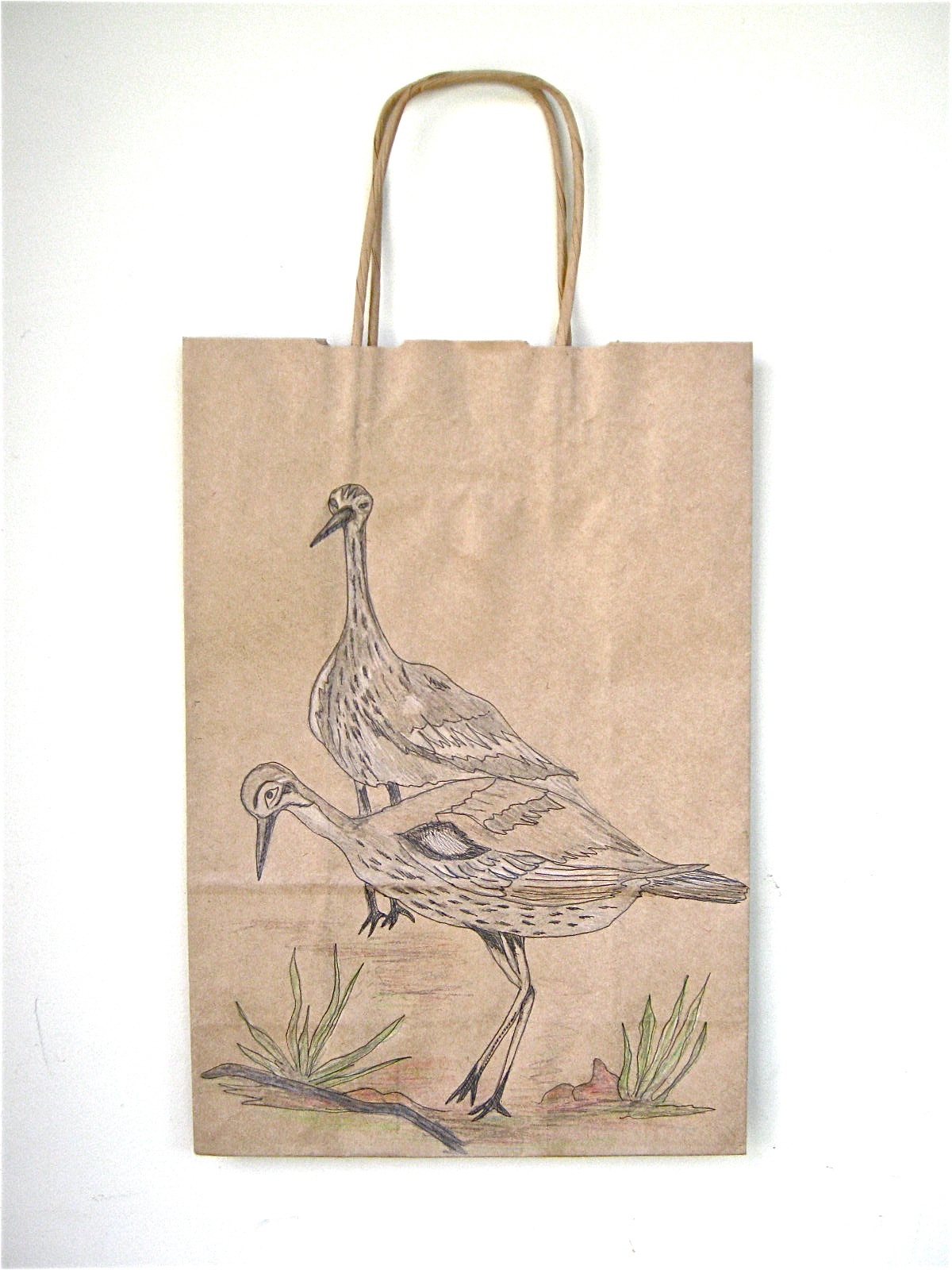
For the artists of proppaNOW, it is their art that represents the real, ‘authentic’ Aboriginal art – one that speaks of the everyday realities of Indigenous experience while critiquing the ways in which Indigenous identity has been shaped by colonial vision. This theme runs throughout Jus’ Drawn in works such as Bianca Beetson’s text drawings, which opine, “SORRY for not being white enough. SORRY for calling myself ‘blak’” or those of Andrea Fisher, in which brown paper bags are delicately refigured as “everyday dilly-bags.”


Andrea Disher, Kurloo (From the Dilly Bag Series), 2010


And yet, the implication of Bell’s critique goes one step further suggesting an Indigenous complicity in the creation of a subjugated identity. In Bell’s own work, identity is forged from a mad jumble of appropriated signifiers, from sources as disparate as Roy Lichtenstein and Emily Kame Kngwarreye. The implication is that identity is created at the intersection of historically shifting subject positions. This destablises any claim to an ‘authentic’ Identity position of any kind, and problematises the entire paradigm of ‘Aboriginal’ art. What is the point of being the most ‘authentic’ Aboriginal art, if the very category is inalienably ‘A White Thing’ which facilitates its own othering?  As Stephanie Radok has speculated, “surely as long as we call it Aboriginal art we are defining it ethnically and foregrounding its connection to a particular culture, separating it from other art and seeing it as a gift, a ‘present’ from another ethnography.”[3] Whichever way the dichotomy is presented – between urban and remote, traditional and contemporary, proppaNOW and Ooga Booga Art – at the core is an essentialised notion of Aboriginal identity that is clearly unsettled by artworks whose raison d’etre is to explore the endless variety of experiences that inform contemporary Indigenous existence.


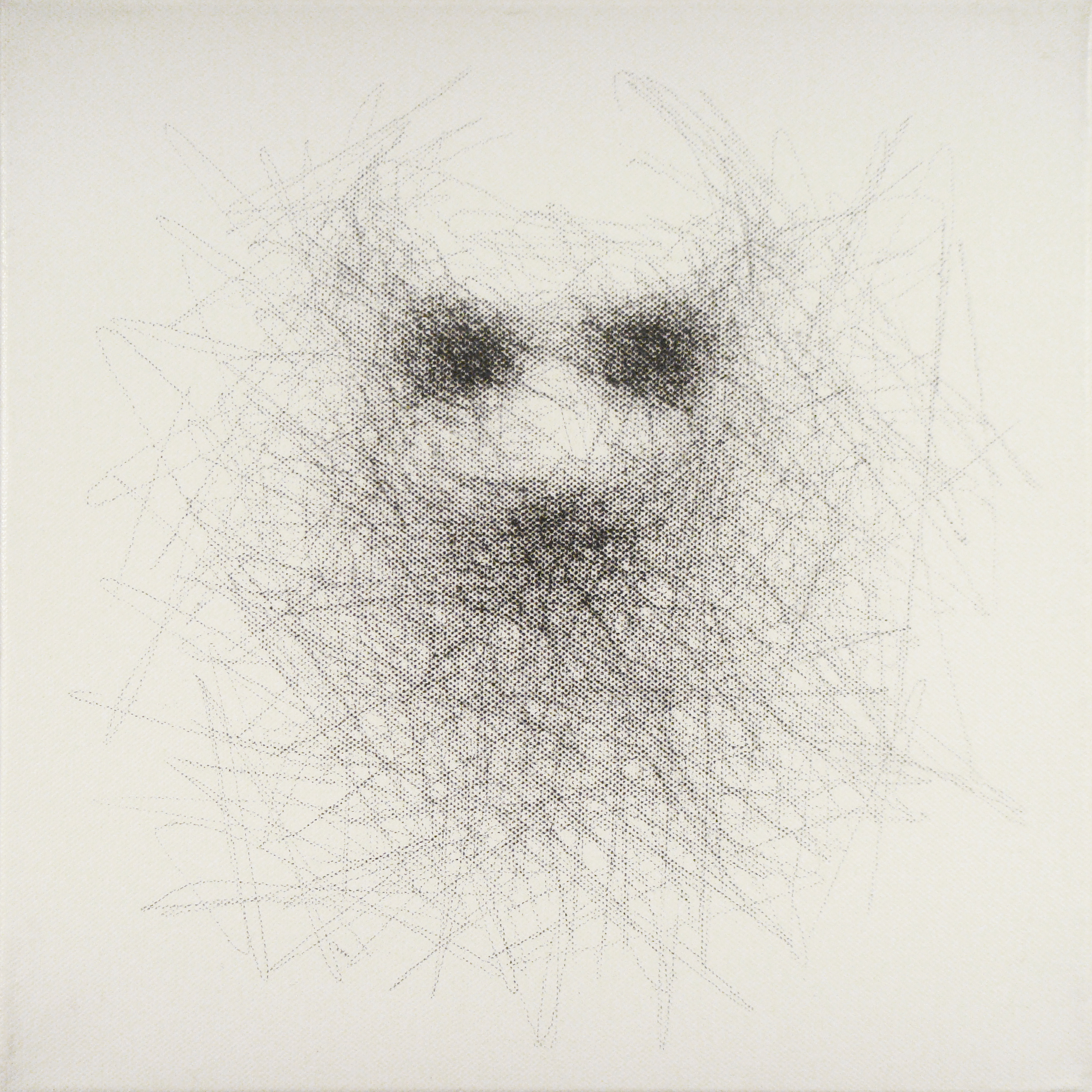
Vernon Ah Kee, Unwritten, 2010


According to Tony Albert, “The most important thing is how you choose to be labelled.”[4] And yet, as the story of his grandfather reveals, this is a freedom that has long been denied to Indigenous people. Indeed, Albert has literally enacted this classificatory violence, defacing pop-cultural images of Indigenous people with racist labels like ‘Coon’, ‘Abo’ and ‘Halfcaste.’ If, as Bell’s work suggests, identity construction is a continuing act of negotiation, the art of proppaNOW is about taking control of this constructive process. This is, perhaps, most poetically articulated in the drawings of Vernon Ah Kee. Since 2004, Ah Kee’s art practice has been dominated by a series of large-scale portraits of his family members. The source material for his first portraits came from archival photographs of his grandparents, in exile on Palm Island in the 1930s. According to Ah Kee, the photographs were taken by the administrators of the Aboriginal penal settlement as “a scientific record of the dying species of subhumans … this exotic ‘other’ that had been set aside.”[5] In enlarging these images to an imposing scale, Ah Kee returns power to their gaze. As their faces shimmer into being amidst an urgent flurry of pencil lines, they do not evoke an elegiac longing, but rather, a profound moment of presence – the immediacy of a unique, individual identity slowly taking shape from the haze. In this coming into being, we get a glimpse of the subtle but immense shift between the old paradigm of Aboriginal art, and a new understanding of contemporary art, produced by singular Aboriginal artists.


[1] Tony Albert, phone interview, July 30, 2010.

[2] See for instance Archie Moore, “‘Black Eye = Black Viewpoint: A Conversation with proppaNOW,”’Machine, 1:4: (2006): 4.

[3] Stephanie Radok, “The ethnographic present: Aboriginal art today – the gift that keeps on giving,” Artlink 29:1 (2009).

[4] Tony Albert, phone interview, July 30, 2010.

[5] Vernon Ah Kee, quoted in Message Stick: Born in this Skin, ABC1, first broadcast Sunday 13 December 2009.

Comments Off on Drawing NOW: Jus’ Drawn’

Filed under Uncategorized

Choosing Who Will Keep the Stories Strong: The Garrawurra Artists of Milingimbi

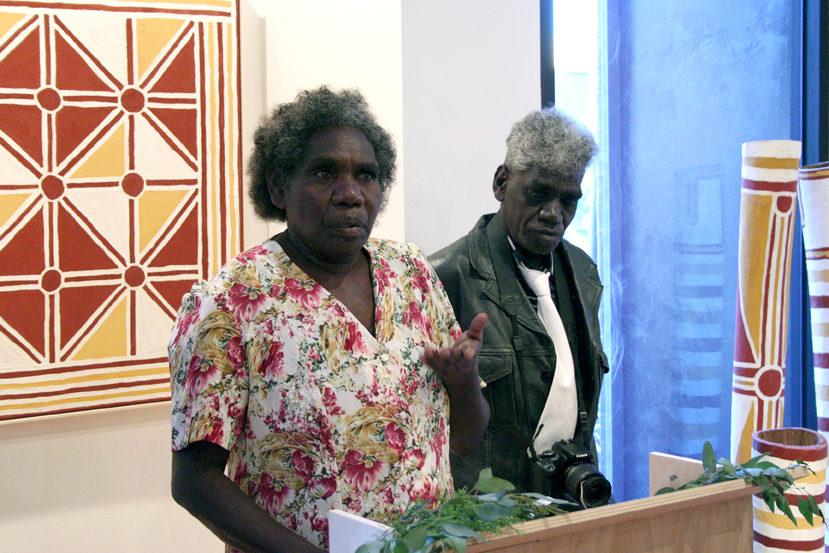
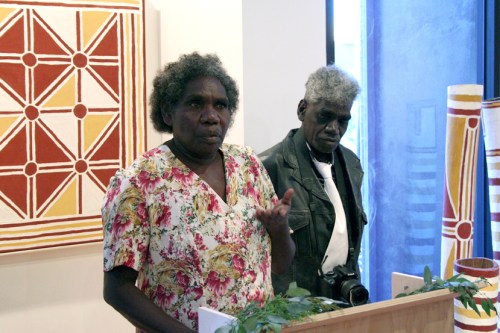
Ruth Nalmakarra and Joe Dhamanydji at the opening of Goyurr Manda Dja’nkawu and the Morning Star at Mossenson Galleries, Melbourne, January 2007

The following article appeared in Artlink, Vol 29, no. 3, 2009

In the wake of the Federal Government’s 2007 Emergency Intervention in the Northern Territory, negative portrayals have dominated media coverage of remote Indigenous communities. Reports of violence and substance abuse have been held as symptomatic of the breakdown of Indigenous family structures and the annihilation of Indigenous culture. This narrative has spilt into art criticism, where the works of senior Indigenous men and women are often viewed through the prism of a cultural mausoleum. In a discourse steeped in the melancholy longing for lost authenticity, each mark upon the canvas is framed as the last glimpse of a fading world.

This is the story of group of contemporary Indigenous artists on the small island of Milingimbi, off the coast of central Arnhem Land. It is not a story of cultural annihilation, but rather, one of renewal. It shows the resilience and adaptability traditional Indigenous family systems, and how one community has internally guided transformations in familial and clan relationships in order to meet their changing needs in the modern world.

In early 2006, the renowned Liyagauwumirr painter Mickey Durrng Garrawurra passed away in his home on Milingimbi. For many years, Durrng (1940-2006) and his brother Tony Dhanyala (1935-2004) were the only people authorised to paint the Liyagauwumirr’s most important clan designs: the Djirri-didi painted on the body during the Ngarra cleansing ceremony. There is a refined elegance to these designs: at their simplest they consist of nothing more than a series of austere horizontal bands of yellow, red and white. To the Liyagauwumirr, however, they contain all the mysteries of their ancestral homelands. According to Durrng, “These designs are the power of the land. The sun, the water, creation, for everything.”[1] Rich in ‘inside’ meanings, the full ‘story’ contained within these designs was traditionally known only to initiated Liyagauwumirr men. Before his death, however, Durrng made the seemingly unorthodox decision to pass this knowledge and authority to his sister Ruth Nalmakarra (b.1954) and her family. What followed was a flowering of tradition, as Nalmakarra and her sisters used this broadened authority to instigate a cultural revival that united their community around these ancient designs.

The striking visual power of the Djirri-didi first came to widespread attention in the early 1990s, when Durrng began painting them on bark. His combination of strict geometries and flat-plane fields of colour was in marked contrast to the fluidity and fine cross-hatching for which much Arnhem Land art was admired. As Djon Mundine has noted, Durrng’s work was met with a mixed critical response, with many curators, collectors and critics claiming that his paintings looked “too modern.”[2] In some cases, the crispness and formal order of Durrng’s barks was mistaken as a calculated acquiescence to the aesthetic of late-modernist abstraction. In other instances, it was simply that his cool contemporaneity was out of step with an art market that festishised the primitive.

But Durrng’s primary concern was always tradition and continuity, as opposed to any aspirations towards modernism. Although ‘modern’ in appearance, his designs adhered strictly to those painted on the body during the Ngarra ceremony. Ostensibly a mortuary rite performed to remember the dead and to prepare their spirits for the afterlife, the Ngarra ceremony is also a celebration of regeneration and renewal that recalls the ancestral travels of the Dja’nkawu Sisters. According to legend, during creation time, the two sisters Dhalkuwrrngawy and Barradawy crossed the landscape giving birth to the first people of the Dhuwa moiety. The sisters created the Dhuwa’s clans, languages, names, ceremonies and customs. During the Ngarra ceremony, the Liyagauwumirr paint their bodies and ceremonial objects in the tri-colour of Miku (red), Watharr (white) and Buthjalak (yellow) in recollection of the Dja’nkawu Sisters’ travels. The participants hands are painted white to signify the Sisters’ landing on the mainland at Yalangbara (near Groote Eylandt), while other markings symbolise key moments on their journey, such as sites at Garriyak and Dhambala, where they created sacred waterholes by piercing the ground with their digging sticks.
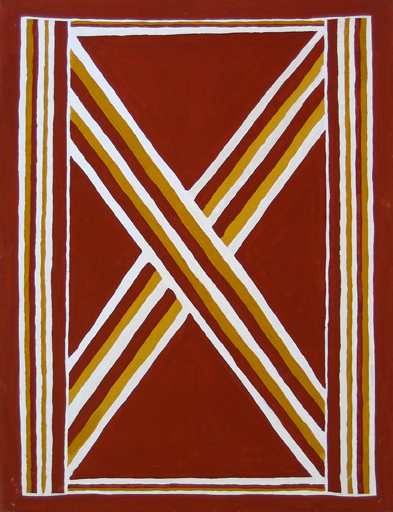
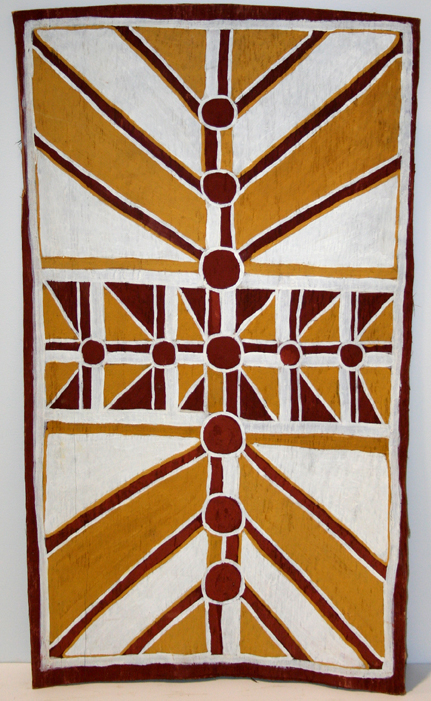
Lena Walunydjunalil, Djirri-didi, ochre on canvas, 100 x 75 cm, 2006. Private Collection, Melbourne. Courtesy of Milingimbi Art Centre and Mossenson Galleries.

Chris Durkin recalls vividly the first time he met Mickey Durrng. Fresh from a tenure as a field-officer for Papunya Tula Artists, in 2005 Durkin was employed by the Milingimbi Council to re-establish an art centre on the island. As an artist at the end of his life, Durrng was desperate to continue recording his stories and designs. The artist approached the newly appointed arts coordinator saying, “I’m Mickey and I’m a famous artist. I’ve had exhibitions in Paris and London. You’ve got to give me materials to paint.”[3] Through the auspices of the new Milingimbi Art Centre, Durkin began providing the ailing artist with materials so that he could produce what would be his final body of work.

As Durrng’s health deteriorated, Durkin got to know the artist’s extended family. Durrng was one of the last senior men of the great Garrawurra family of ‘seven fathers’. Durrng’s grandfather sired seven sons, of whom Durrng’s father Nupurray Garrawurra was the youngest. An artist in his own right, Nupurray fathered around 10 children of his own, including the artists Margaret Rarru (b.1940), Lena Walunydjanalil (b.1944) and Helen Ganalmirrawuy (b.1955). After the death of his elder brother Madanggala Garrawurra, Nupurray also raised his brother’s children, which included Ruth Nalmakarra.

In the often-patriarchal systems of Indigenous law, Durrng’s decision to pass clan authority to his sister may seem like a drastic measure, indicative of the breakdown of family structures and the lack of male role-models. In reality, the reasons for Durrng’s actions are far more complex. Firstly, by chance, both Madanggala and Nupurray fathered more daughters than sons, meaning that Mickey’s generation was dominated by women. More importantly, however, the decision was based on a considered concern for the survival of these stories. Ruth Nalmakarra explains:

Elders have a responsibility to choose who should take over the leadership to carry on the stories. It happens this way because people are passing every day, every month, every year. In that case, before they pass, they have to call on those people that they can choose to keep the stories strong. They look to people with strong feelings and a strong voice. They appoint them to know and to carry on the story.[4]

The key responsibility for elders such as Durrng is to ensure they select the person best suited to keeping the stories strong. In the case of the Liyagauwumirr, it was not simply that there were no available men, but rather, that Durrng saw Nalmakarra as the best advocate for these stories. In his view, she was the strongest cultural person; more knowledgeable, committed and vocal than her surviving brothers. Moreover, it is important to note, that although these were traditionally ‘men’s’ stories, no cultural knowledge was lost in this transaction. Lindy Allen, Senior Curator of Northern Australian Indigenous Collections at Museum Victoria argues that often senior women’s knowledge of important ceremonial stories is underestimated: “They are not expected to speak about such things, but they often know them.”[5]

In October 2006, after a period of mourning for their brother, Nalmakarra and her sisters began to revive the clan designs that he had entrusted to them. Although many of the women were accomplished weavers, the gender restrictions on their clan designs meant that none had painted before. After tentative beginnings, soon a prolific outpouring of paintings began to emerge. Durkin recalls:

It was unforgettable! They left it for a while after Mickey’s death, but then all of a sudden all these paintings started coming in from everywhere. And they were not ordered or repetitive, but crazy, like they had been hanging out to paint them forever. There were so many amazing designs.[6]

Helen Ganalmirrawuy, Gapu Milminydjarrk ( Waterholes at Garriyak), ochre on bark, 2007, 113 x 63 cm (variable). Private collection Perth. Courtesy of Milingimbi Art Centre and Mossenson Galleries.

John von Sturmer has argued that in Yolngu art, “Every painting carries with it the claim or the assertion: ‘I am entitled to paint this.’”[7] In Durrng’s work, this manifest itself in his commanding understatement; as though his aesthetic restraint alluded to the power withheld from his representations. In the women’s paintings this sense of entitlement was revealed quite differently. Where these works lacked the crisp precision of Durrng’s paintings, they replaced it with a keen sense of excitement, spontaneity and formal inventiveness. Whilst this was undoubtedly due in some part to their lack of training, Durkin argues that it was also indicative of their excitement at their new authority. He notes, “While big law-men often paint in a strict controlled manner, these works are about playing with the designs, having great passion that reflects love, enjoyment and family. The women are embracing the opportunity to own it, to be proud of it.”[8]

This is best illustrated in a comparison between Durrng and his sisters’ depiction of one of the key Liyagauwumirr stories: the Gapu Milminydjarrk or Waterholes at Garriyak. In Durrng’s depiction of the story, the waterholes are always evenly sized and spaced, gaining their charge from the contrast of light and dark colours in a rigid geometric order. In approaching the same design, his sister Lena Walunydjanalil abandons this sense of order, irregularly arranging her waterholes so that they pulsate unevenly across the bark in a movement that comes more from her use of line than from tonal contrast. Margaret Rarru, on the other hand, utilises the irregular shape of the bark as a springboard for her designs, creating a tension between frame and content as her forms appear to push outwards against the border. In 2007, one of Rarru’s works was awarded the bark painting prize at the Telstra National Aboriginal and Torres Strait Islander Art Awards. Helen Ganalmirrawuy maintains some of Durrng’s geometric order, but has developed a much busier and complex decorative schema that relies heavily on white outlines – a technique rarely seen in her brother’s work. In fact, of the sisters, it is Nalmakarra whose work remains the strictest adherent to tradition. Nalmakarra’s paintings maintain a stately restraint, and in some instances, such as her use of cross-hatching, appear to hark back to even older aesthetic modes. Durkin speculates that this strict adherence is a result of both Nalmakarra’s respect for her brother’s legacy, but also the intense sense of responsibility that she feels for these designs. According to Durkin, “She knows she must be beyond indictment.”[9]

In the variations of the Liyagauwumirr women, we see a cultural and epistemic moment when shifts in family structure result in the rapid influx of new approaches to a traditionally restricted and highly formalised mode of art production. Howard Morphy has noted, that although Indigenous geometric designs appear stable over time, in reality they are “the springboard for creativity and diversity … responsive to the subtleties of aesthetic practice and the parameters of possible variation.”[10] For the non-Indigenous art historian – necessarily ignorant of the restricted ‘inside’ meanings of the Djirri-didi – this presents a singular moment for aesthetic engagement when judgements can be made upon precisely those elements with remain constant and those which are open to experimentation and change. In doing so, it suggests alternative critical methodologies which are responsive to both cultural continuity and aesthetic innovation. Put simply, as Nalmakarra clarifies, “There are different ways of painting and different patterns, but they mean the same thing. We know the stories, so we know which ones to choose.”[11]

If this broadening of cultural authority has created a unique moment for non-Indigenous engagement with Liyagauwumirr design, under Nalmakarra’s stewardship it has also been an important moment for engagement within the community at Milingimbi. With Durrng’s authority, Nalmakarra and her sisters have made their clan designs available to a wide range of Liyagauwumirr artists, including a younger generation of artists such as Susan Yirrawuy (b.1974), Jocelyn Gumirrmirr (b.1974), Angelica Bulurruwuy (b.1986) and Durrng’s son Robert Djawdjawku (b.1971). Not only has this kept the designs strong within the Liyagauwumirr, but it has provided an important economic and cultural outlet at Milingimbi. The biggest problem facing the community at Milingimbi, according to Durkin, is “a lack of meaningful engagement with the Balanda (non-Indigenous) world.”[12] Whilst young people at Milingimbi have strong traditional culture, they struggle to find value for this knowledge in the wider world. Durkin continues, “The only way this can be reconciled is by employing people in culturally relevant ways, such as at the art centre and school.” And this is precisely what Nalmakarra hopes to achieve through painting the Djirri-didi:

We want the children to learn that it is important for their culture, it is important for their art to be alive. That is why we have the art centre: to keep the paintings that the old people passed onto us, to keep them alive so we can pass them on to the next generation.


[1] Mickey Durrng, quoted in Brenda Westley and Steve Westley, ‘Mickey Durrng: Artist of East Arnhem Land’, Aboriginal Art Online, [http://www.aboriginalartonline.com/resources/articles2.php]

[2] Djon Mundine, The Native Born: Objects and Representations from Ramingining, Arnhem Land, exhib. cat., Museum of Contemporary Arts, Sydney, 1996, p105.

[3] Chris Durkin, phone interview 12 June 2009.

[4] Ruth Nalmakarra, phone interview 29 May 2009.

[5] Lindy Allen, interview, Melbourne Museum, Carlton, Victoria, 11 June 2009.

[6] Chris Durkin, phone interview 12 June 2009.

[7] John von Sturmer, ‘A Limping World: Works in the Arnott’s Collection – Some Conceptual Underpinnings’, They Are Meditating: Barks from the MCA’s Arnott’s Collection, exhib. cat., Museum of Contemporary Art, Sydney, 2008, p.50.

[8] Chris Durkin, phone interview 12 June 2009.

[9] Chris Durkin, phone interview 12 June 2009.

[10] Howard Morphy, Becoming Art: Exploring Cross-Cultural Categories, University of NSW Press, Sydney 2008, p77.

[11] Ruth Nalmakarra, phone interview 29 May 2009.

[12] Chris Durkin, phone interview 12 June 2009.
Comments Off on Choosing Who Will Keep the Stories Strong: The Garrawurra Artists of Milingimbi

Filed under Uncategorized

Review: Emerging Elders at the National Gallery of Australia

Below is the extended version of a review that first appeared in Art Guide Australia, January/February 2010

As the Indigenous art movement has developed in Australia, it has continually been refreshed, renewed and reinvigorated by the appearance of new, elderly artists. Whilst this has been something of a unique feature to Indigenous art, it follows a certain internal logic. It is these older artists who remain closest to the pre-colonial cultural traditions which make Indigenous art unique, and, as Indigenous culture places a premium on seniority, it is these ‘elder’ artists with the greatest cache of cultural knowledge to draw upon. The Indigenous art market, in particular, has helped reify the notion of ‘elder’, making it a common refrain of commercial gallery sales pitches, in which each and every geriatric Aboriginal artist is carefully positioned as a profound repository of arcane spiritual and cultural knowledge.

Unfortunately, this simple reification of age does not accurately reflect traditional Indigenous power systems, which are based on far more complicated stratifications of ceremonial knowledge, clan affiliations, gender, custodial rights and responsibilities. The reduction of cultural seniority to the egalitarian category of ‘elder’ fails to recognise the personalities and backgrounds of individual artists. Just because an artist is elderly, it does not necessarily follow that they are an Elder in a ceremonial, custodial or leadership capacity.

This may seem like a pedantic point – particularly in relation to an exhibition as gloriously celebratory as Emerging Elders (National Gallery of Australia, 3 October 2009 – 14 June 2010). And yet, it points towards a profound disjunction between traditional Indigenous cultural and aesthetic values, and the art market. On the one hand, the market supposes to hail the continuation of culture – celebrating Indigenous art for its ‘stories’ and cultural knowledge. On the other hand, it is often not the most culturally important works or artists who are most popular in the marketplace. In some instances, senior artists work is considered too ethnographic or rigidly traditional for a market which prefers bold, individual expressionism. In other cases, the more culturally knowledgable artists work across too many styles or stories – something which gives them great kudos amongst their peers, but is less attractive to a marketplace that favours easily identifiable ‘trademark’ designs.

These are questions that overshadow the reception of Indigenous art. They are questions in dire need of address if non-Indigenous Australians are to begin to have any meaningful engagement with Indigenous art. They are not insurmountable questions, but ones which require a patient, careful and considered cross-cultural dialogue on aesthetics and value.

Despite being evoked in the exhibition’s title, however, these urgent questions are not answered in Emerging Elders. First and foremost, Emerging Elders is a celebration of contemporary masterworks from the National Gallery of Australia’s collection. Like the Gallery’s 2007 Triennial of Indigenous Art, it lavishly showcases the institution’s ongoing commitment to collecting and exhibiting the finest examples of contemporary Indigenous art. Indeed, many of the nation’s leading artists are represented with major works. Gulumbu Yunupingu’s shimmering bark paintings of Garak, The Universe make a majestic centrepiece to the exhibition. And yet, their presence inevitably causes one to question the category of ‘emerging’. Gulumbu is a former winner of the Telstra National Aboriginal and Torres Strait Islander Art Awards, her designs adorn the ceiling of the Musee du Quai Branly in Paris and in 2006 she was awarded the Deadly Award for Visual Arts. By every possible standard, Gulumbu is an established and major figure in Australian art. The same could be said of many of the artists in Emerging Elders – such as Ningura Napurrula, Shorty Jangala Robertson or Dorothy Napangardi – who have all had long and distinguished careers. Others seem to have emerged to the very point of over-exposure, such as the prolific Bentinck Island Elder Mirdidingkingathi Juwarnda Sally Gabori, who has been a ubiquitous presence in recent Indigenous art exhibitions.

But perhaps more confusing, is the inclusion of artists whose position as ‘elders’ seems less assured. Anmatyerre painter Billy Benn Perrurle is represented with a monumental depiction of his homelands Artetyerre, whose glissandos of overlapping brushwork brilliantly reveal his development from a painter of small, delicate landscapes into a rugged, De Kooning like expressionist. In another room, a large canvas by Tiwi artist Timothy Cook shows the artist finding a new maturity – balancing his typically idiosyncratic sense of form with the addition of fine over-dotting. The work retains the raffish charm of Cook’s early paintings, but tempers it with a sense of cosmological delicacy. And yet, whilst both works are indisputable highlights of the exhibition, as outsider artists, neither Cook nor Benn properly fit the mould of ‘elder’ in the sense of cultural knowledge, leadership or responsibility. Both artists belong to communities from which there are both older and more culturally senior artists. One surmises, they have been included for their artistic rather than cultural pre-eminence. In this sense, they seem to fit neither categories of ‘emerging’ nor ‘elder.’

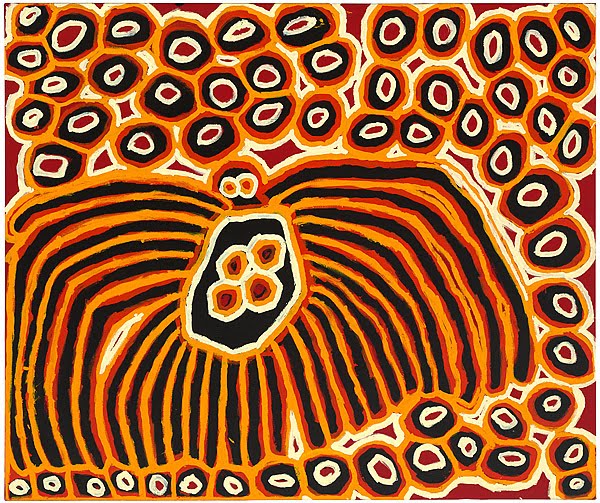
It is the artists who fit most comfortably into both categories whose voices speak most commandingly in Emerging Elders. Born in 1928, Harry Tjutjuna of Ernabella is represented with a spectacular depiction of the Wangka (Spiderman) Tjukurpa. Glowing in an incandescent haze of orange, red, yellow and black, it is like a grand, pop-art rendering of an ancient Dream. It speaks with a bold visual inventiveness that asserts its presence and the authority of knowledge it contains.

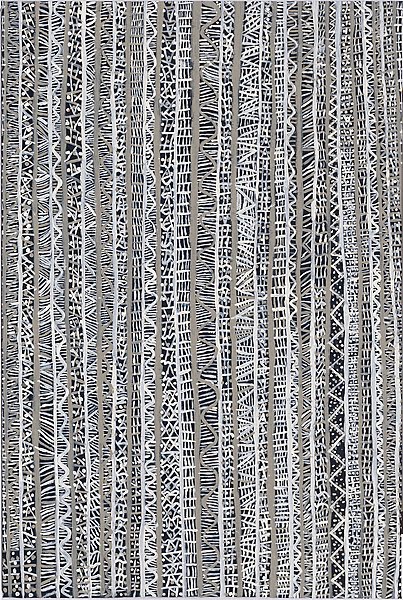
Other works speak just as authoritatively, but in a hushed voice, whose gentle overtones whisper of a different time and place. Kimberley elder Alan Griffiths painting of dancers engaged in the Mindarr and Waringarr ceremonies bristles with the action of a giant carnival while locking into an ancient schemata that fills it with a still, silent nostalgia for past times. Elizabeth ‘Queenie’ Giblet’s Pa’anmu (Headbands) for Laura Festival (above) evokes a faded memory of ancient ceremonial markings through her understated and elegant use of grey, black and white. These works conjure the air of a passing epoch – a time when the ceremony ground would fall silent in anticipation of the Elders’ command. And yet, they also show the continuing power of this voice in contemporary art. They show how the Elders’ voice can continually emerge, to be reshaped into dynamic and relevant contemporary statements. It is these works with the power to once again strike us silent with awe.

Leave a comment

Filed under Uncategorized

A Contemporary Spirit: The Art of Graham Badari

This following essay was written to accompany Graham Badari’s first solo exhibition, held at Mossenson Galleries Perth,  March 16 – April 25, 2010.

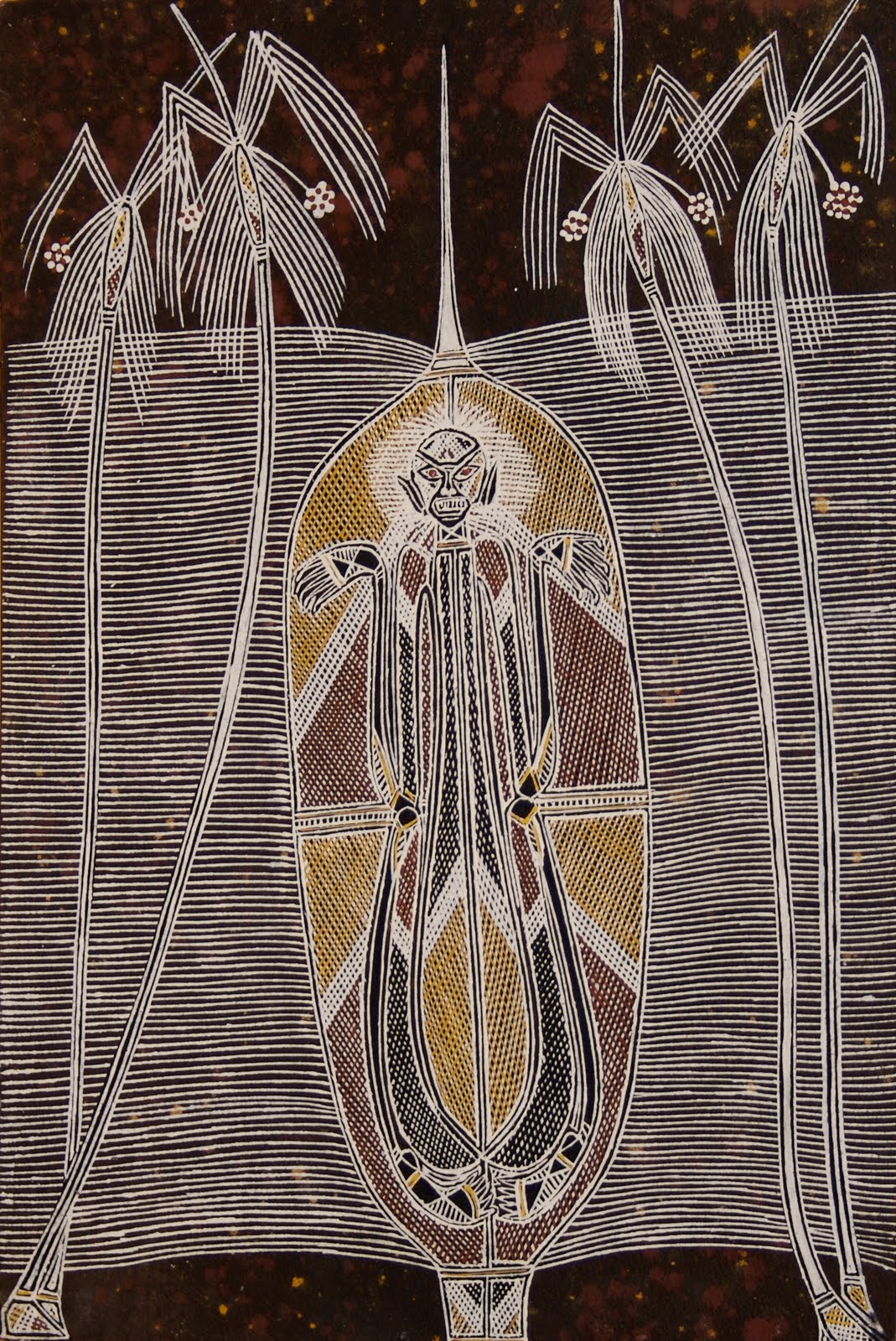
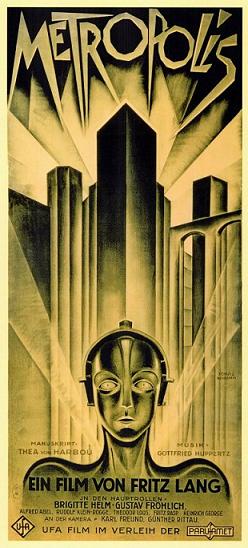
A pair of red eyes glowers from an angular, skeletal visage. Its snarling grimace revels sharp teeth, its razor-like claws borne forth ready to strike. This is one of the unseen dangers of the bush: Namarnde, the malevolent spirit of the box pandanus. When pregnant, Kunwinjku women avoid walking too close to pandanus bushes, in case Namarnde captures the spirit of their unborn babes. In Graham Badari’s painting, this terror is brilliantly evoked through a combination of jagged ferocity and delicate cross-hatching or rarrk. His painting transports the viewer to the mystical landscape of the stone country, where spirits inhabit every crevice and ancient paintings adorn the rock-faces. At the same time, Badari’s Namarnde is uncannily futuristic, bearing a striking resemblance to the cyborg Maria from Fritz Lang’s 1927 sci-fi epic Metropolis.

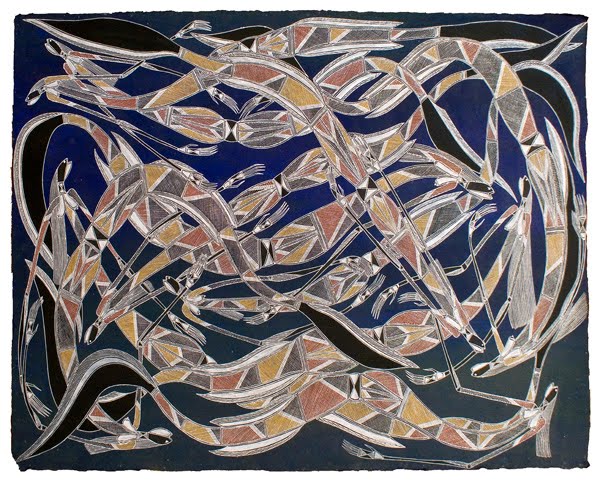
Graham Badari was born in 1963 at Gunbalanya (Oenpelli) in Western Arnhem Land. His country is Maburrinj, near Kudjekbinj, about 120 kilometers east of Gunbalanya. He was raised by the renowned artist Djawida Nadjongorle, but like many of the artist at Gunbalanya, credits the late Thompson Yulidjirri as his greatest artistic influence. From these senior men, Badari learnt the fluid and dynamic style that defines Kunwinjku painting at Injalak Arts. He began painting sporadically around 1990, but in recent years, his career has gained a new focus and momentum. Following the recent passing of many of the senior artists at Gunbalanya, Badari has become one of the leaders of a small coterie of dedicated artists, which includes Wilfred Nawirridj, Glenn Namundja, Gabriel Maralngurra, and Gershom Garlngarr. They are a ubiquitous presence at Injalak Arts, and are fiercely proud of their art, community and art centre. Their paintings show a faithful dedication to the visual language of their rock-art heritage, while remaining committed to artistic innovation. It is this beguiling balance of tensions – innovation and tradition, ancient and modern, beauty and terror – that energises Badari’s paintings. And yet, to understand how his work could so effortlessly embody these apparent dualities, it is necessary to understand how these competing positions coexist within Badari’s worldview, informing his unique and eccentric personality.

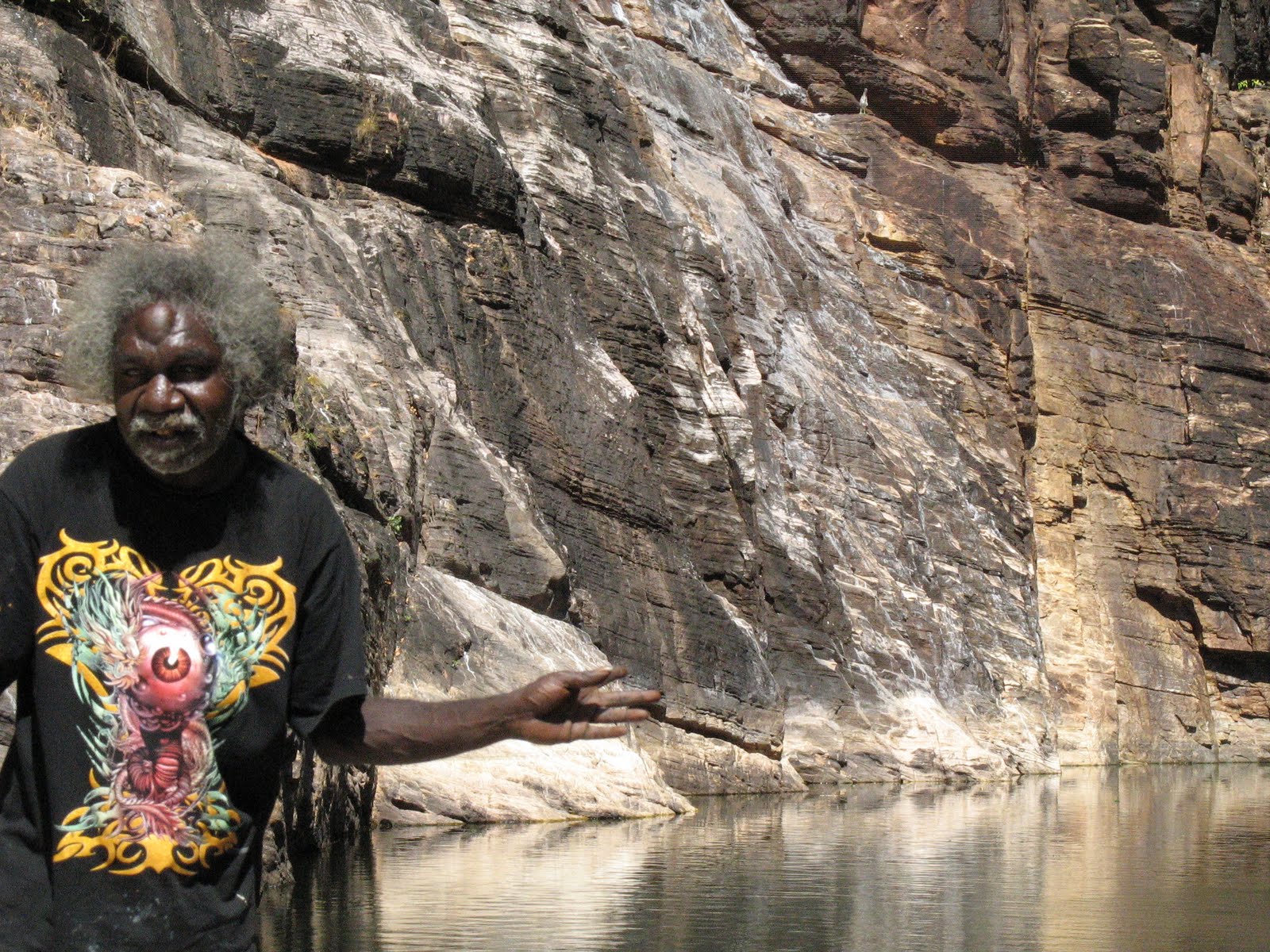
With his impish smile and cheeky sense of humour, Grahama Badari or ‘Grammy’ as he affectionately known, is the gentlest of souls. He is a popular figure at the art centre, a beloved tour guide and font of community news. And yet, as his paintings suggest, Badari has a fascination with the darker side of life. Walking in the bush, he is careful to warn of the dangers of Namarnde or other malicious spirits such as Namarrodoh. Always concerned with the safety of his guests, he cautions of the equal dangers posed by the very present Kinga (salt-water crocodile) and the more otherworldly Ngalyod (Rainbow Serpent). Badari believes wholeheartedly in the presence of these spirit beings; they are an intrinsic part of the cultural heritage that has informed his life.

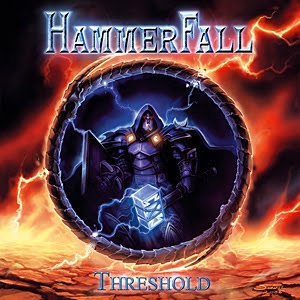
On the other hand, Badari is sensitively attuned to the modern world. The ease with which he traverses this cosmology of the mystical and the everyday might go some way to explaining his attraction to western science-fiction and fantasy imagery. This passion is not only evident in Badari’s paintings, but in his distinctive choice of fashion, which favours the kind of lurid fantasy t-shirts more commonly seen on teenage heavy metal fans. Perhaps unsurprisingly, Badari is also a keen follower of heavy metal music, with his favourite band being the Swedish group Hammer Fall. Indeed, it is worth comparing Badari’s depictions of Namarnde and Namarrodoh with the red-eyed, hammer-wielding leviathan featured on the group’s album covers, designed by renowned graphic artist Samwise Didier. That said, when questioned on these striking visual parallels, Badari is quick to refute such influences, preferring to highlight the traditional aspects of his work. To Badari, these are ancient stories that he holds in the deepest respect, and he rejects the suggestion that he might be trifling with them by bringing in profane external influences.

And yet, it is this disavowal that reveals the very essence of Badari’s paintings. For in suggesting that his works are a ‘fusion’ of the traditional and the contemporary, it is vital to note that this is not some sort of wry pastiche of ironic allusions and winking ironies. Badari’s work contains none of this post-modern disingenuousness; he is an artist of deep, abiding integrity. The meticulous care that he takes with his work, with its fine attention to detail and delicate rarrk, is a reflection of the reverence with which he holds both stories that he paints and visual tradition they embody. Badari’s paintings are heartfelt depictions of his cultural heritage, and he paints them with all his being, striving to make them as vivid, striking and beautiful as he knows how. If they are a fusion of old and new, it is because Badari’s worldview completely, comfortably and intuitively traverses both Indigenous and western episteme. His paintings are reflections on a living culture – one that encompasses both ancient tribal songs and heavy metal riffs. Like all great artists, Badari captures the spirit of his time, and through his unique artistry, brings tradition forward into a dynamic contemporary vision.

Leave a comment

Filed under Uncategorized

Billy Kenda

The following essay was written to accompany Billy Kenda: The First Solo Exhibition held at Mossenson Galleries, Subiaco, Western Australia, April 13- May 9, 2009

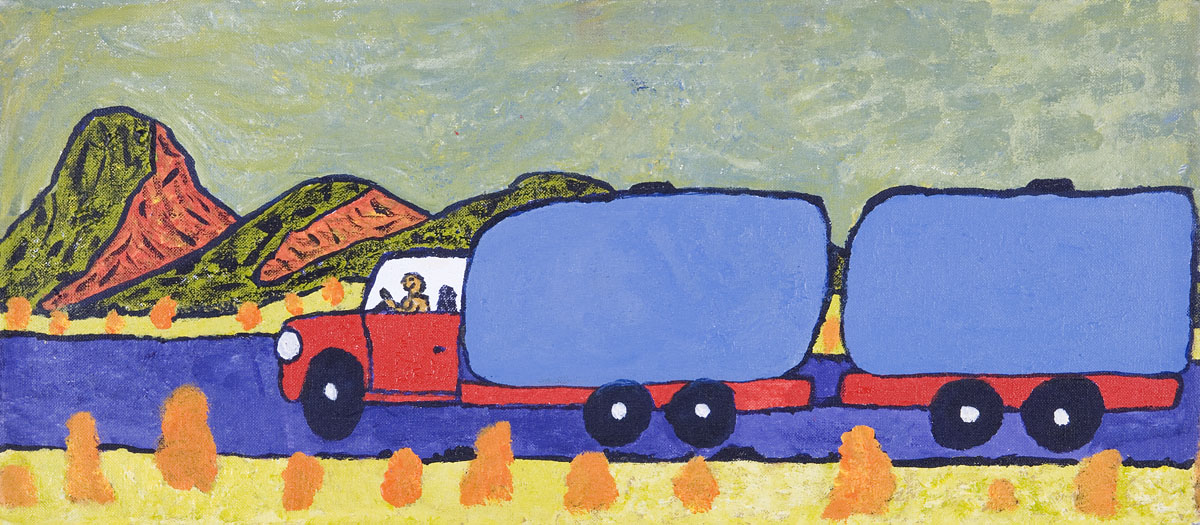
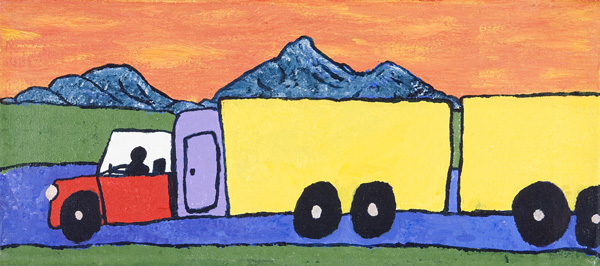
A truck screams across the desert. The heat belting down upon the asphalt makes it glow a deep, languid blue. The driver has his eyes fixed forward upon the road as it stretches out onto the horizon. His face bears a wobbly smile, as though absorbed in the rhythms of the latest catchy tune blaring on his car radio. Around him, the desert rises in glorious majesty; purple mountains ascend into a crimson sky that beams down upon the desert’s gleaming yellow sands. But the driver does not note this grandeur for he is transfixed by his journey, his eyes planted firmly on the highway as it speeds him to his destination.

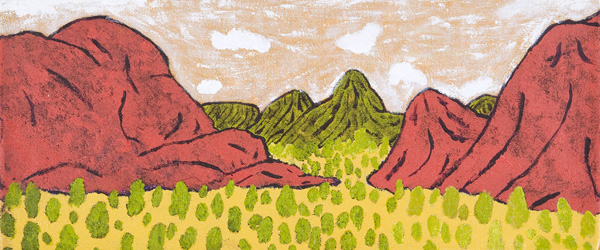
For Billy Kenda, the desert landscape is a place of Arcadian splendour. His depictions of country are the sanguine songs of a contented heart; prelapsarian odes to his beloved desert idyll. Rolling hills recede into the picture plain, enveloping the viewer and drawing the eye inwards in a transitory recession. Born in 1972, Kenda began painting in 2004 through the auspices of Mwerre Anthurre Artists (Bindi Inc) in Alice Springs. His father was a Ngaatjatjarr man from Docker River, but Kenda’s paintings are dominated by his mother’s country near Jay Creek in the West MacDonnell Ranges. This is the country where Kenda was raised in the shadow of the purple hills made famous by Albert Namatjira, and in many ways, Kenda’s paintings continue the halcyon vision of his artistic forebear.

And yet, increasingly, Kenda’s landscapes have become dominated by motor vehicles. Cars and trucks speed across the landscape, blocking it, and drawing the viewer to the foreground of the image. At times, these vehicles dominate the picture, and the landscape becomes little more than a hurried, unfocussed blur at the edge of the canvas. In Kenda’s paintings, the motor vehicle becomes a metonym for the encroachment of western modernity upon the Indigenous cultural landscape, offering a subtle, but powerful critique of western vision and our reluctance to embrace or acknowledge an Indigenous view of the land.

It is in this sense that the comparison between Kenda and Namatjira is perhaps most apt, for it was in the works of Namatjira that western audiences were first exposed to an Indigenous vision of the landscape. In his depictions of country, Namatjira appropriated the western tradition of landscape painting as a means of empowering Indigenous perspective. As Ian Burn has noted, “The Arrente style may be interpreted as a strategy to control what is secret and what is sacred, while still expressing to a white audience an Aboriginal relationship to the land,” in order, as Galarrwuy Yunipingu continues “to demonstrate our continuing link with our country and our rights and responsibilities we have to it.” Namatjira’s paintings present a defiant call to see the landscape from an Indigenous viewpoint. In doing so, he helped inaugurate the Indigenous art movement which has gone on to be one of the dominant frontiers upon which Indigenous peopl e have engaged with modernity and shown their culture to be relevant, contemporary and strong.

Despite their apparent joviality, the work of Billy Kenda sits at a forceful critical intersection of this visual engagement with the hegemony of western vision. As western society spread into the heart of the nation, highways were built across the desert – Kenda’s traditional homeland. But highways are built upon the principle of fastest movement between origin and destination; upon the assumption that what lies between is unimportant. Margaret Morse has theorised that the car becomes the de-realised ‘non-space’ that allows us to negotiate this distance. In the interior of the motor vehicle the traveller is insulated from the outside world, achieving what Morse calls a ‘mobile privatisation’ that serves to displace or separate us from our surroundings. This contrasts severely with an Indigenous cosmology, in which it is songlines and not highways that run across the country connecting all places, people and things. In this worldview, travel becomes a process deeply connected to the landscape; a process of continuity, identity creation and placedness.

But the songlines of the highway are insular; disconnected. This is how Kenda depicts his drivers, absorbed in the detached world of their mobile cabin, bopping along in ignorant bliss to the enveloping beauty of the world around them. When cars are absent from Kenda’s landscapes, the landscape recedes into the picture plain, inviting the viewer to travel across Kenda’s country, to footwalk his hot sands, to taste the desert air and feel the heat upon one’s brow. The inclusion of cars refuses this engagement, pulling the landscape up flat and disallowing travel into the picture plain. Here we find the metaphor of Kenda’s paintings. They are a call to return to the landscape, to escape western vision and to actively see and engage with the world around us. Kenda’s paintings are a challenge to look beyond our assumptions; to see our blindness to the beauty of the world just beyond our frame of reference. For it is here, in the Arcadian splendour of the landscape that the real joy of Kenda’s paintings can be found and from which stems their unique vision and joyful contentment.

Leave a comment

Filed under Uncategorized